
When people search what happens after a massage, the answers are often oversimplified. Most explanations focus on relaxation or repeat outdated ideas about toxins, but the real impact is rooted in measurable physiological changes. These changes are especially important for organizations investing in workplace wellness programs and employee wellness benefits, where recovery, focus, and performance directly affect outcomes.
From a practitioner perspective at Body Techniques, massage therapy goes beyond short-term relief. It influences the nervous system, circulation, and muscle function in ways that support long-term massage recovery, reduced stress, and improved cognitive performance.
In the next section, we break this down into 7 key physical and mental effects, showing exactly what’s happening in your body after a massage based on both science and real-world client outcomes.
What Happens to Your Body After a Massage: 7 Key Physical and Mental Effects
1. Your Nervous System Starts to Downshift
Most people come into a massage carrying some level of stress, even if they’re not fully aware of it. You can usually see it in the body right away, shallow breathing, shoulders pulled up, tension in the jaw, neck, and hands. The body is essentially running in a constant “on” state.
Massage helps shift the body into the parasympathetic nervous system, which is responsible for rest, recovery, and repair.
What that shift looks like:
- Breathing becomes slower and deeper
- Heart rate begins to drop
- Muscles start to soften
- There’s a noticeable sense of calm and ease
This shift can happen quickly. In many sessions, you’ll see it within the first 5–10 minutes, breathing deepens, clients sigh, and the body begins to settle.
Why this matters for the workplace:
When employees aren’t operating in a constant stress state, they’re more focused, less reactive, and better able to handle their workload without burning out.
2. Circulation Improves, Supporting Real Recovery
One of the biggest benefits of massage therapy is improved circulation, which plays a direct role in how the body recovers.
Massage increases blood flow to muscles and soft tissue, which:
- Brings in oxygen and nutrients needed for repair
- Helps clear out buildup from muscle use
- Supports faster massage recovery, especially from repetitive strain
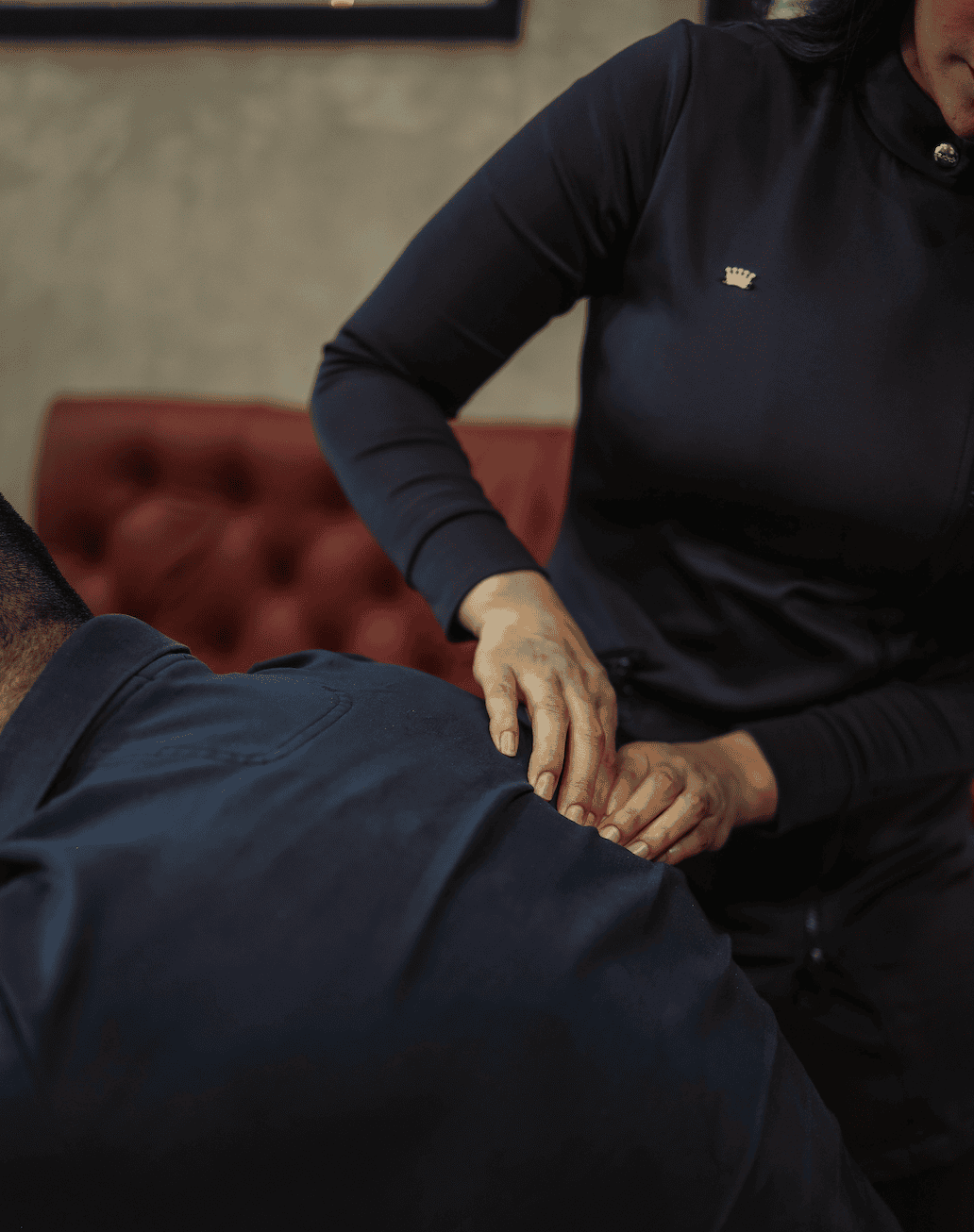
This is especially relevant for desk-based employees. We consistently see tightness in the upper traps, neck, and between the shoulder blades, along with wrist and forearm strain from typing and daily computer work.
Massage doesn’t just temporarily loosen these areas, it helps create the conditions those muscles need to actually recover.
Compared to rest or stretching:
Rest and stretching are important, but massage adds another layer by:
- Increasing targeted blood flow
- Working into deeper areas of tension
- Helping the nervous system relax so muscles can fully release
It’s not just about giving the body a break, it’s helping it reset how it holds tension moving forward.
3. Muscle Tension Releases at the Source
Muscle tension isn’t just physical, it’s closely tied to the nervous system. When the brain detects stress, it signals muscles to stay slightly contracted as a protective response.
Massage helps interrupt that cycle by:
- Releasing built-up tension in the tissue
- Calming the nervous system
- Reducing the body’s need to stay guarded
This is why effective massage doesn’t need to be aggressive to work. Real change happens when the body feels safe enough to let go, allowing muscles to fully release and reset.
4. Mental Clarity and Focus Improve
A key part of what happens after a massage is the mental shift that follows.
Clients consistently report:
- Better focus and clearer thinking
- Less mental overload
- Improved emotional control
- Better sleep, which supports overall performance
In a work setting, that shows up as stronger decision-making, improved communication, and a greater ability to stay present throughout the day.
Massage doesn’t just reduce physical tension, it helps clear mental bandwidth, which is critical for productivity and sustained performance.
5. Post-Massage Effects: What to Expect
After a massage, your body may respond in a few different ways depending on the type and intensity of the session.
Common post-massage effects include:
- Mild soreness, similar to post-workout recovery
- Increased energy and mental clarity
- Deep relaxation or fatigue
All of these are normal and part of the massage recovery process.
Staying hydrated can support recovery, but the body already has built-in systems, like the liver and kidneys, handling waste and regulation.
It’s also important to clarify a common misconception: Massage does not release toxins. It supports circulation and nervous system balance, which helps the body function more efficiently overall.
6. The Workplace Impact: From Recovery to Performance
The benefits of massage extend beyond the individual and directly impact workplace performance.
In corporate environments, regular massage supports:
- Consistent energy throughout the day
- Reduced headaches, neck pain, and back tension
- Improved mood and team morale
- Higher productivity without relying on burnout
Employees often return to work more focused, less overwhelmed, and better able to manage stress. That reset supports both short-term output and long-term sustainability.
7. Why Massage Works in Workplace Wellness Programs
Massage is one of the most effective additions to workplace wellness programs because it’s easy to adopt and delivers immediate results.
- No experience or training required
- Accessible to a wide range of employees
- Immediate physical and mental benefits
Compared to other employee wellness benefits, massage meets employees where they are. It doesn’t replace programs like yoga or mindfulness, it complements them.
Organizations that offer massage often see:
- Higher participation rates than other wellness initiatives
- Stronger employee engagement
- Improved morale and workplace culture
It also creates built-in recovery time during the workday, something many employees won’t prioritize on their own. Over time, these consistent resets help reduce burnout and support retention in a meaningful way.
Final Takeaway: Massage as a Performance Tool, Not Just Relaxation
So, what happens after a massage?
- Your nervous system downshifts out of stress mode
- Your circulation improves, supporting real recovery
- Your muscles release, not just physically, but neurologically
- Your mind clears, improving focus and resilience
And in a workplace context, those changes translate directly into better performance, healthier teams, and more sustainable productivity.
Massage isn’t just a moment of relief, it’s a system reset. And when used consistently, it becomes a strategic lever for both individual wellbeing and organizational success.