
A workplace health fair should be more than a room full of tables and brochures. Done well, it gives employees a chance to step away from their normal routine, connect with helpful wellness resources, and take part in activities they might not otherwise seek out during the workday.
Getting there takes some planning. From choosing the right vendors and promoting the event to managing schedules, booth traffic, and day-of logistics, there are plenty of details for HR and wellness teams to coordinate. And just as important, you need experiences that give employees a reason to stop and participate.
At Body Techniques, we’ve seen how something as simple as onsite massage can help turn a health fair booth into a place employees actually want to visit. Whether you’re organizing your first event or looking to improve your next one, this health fair planning checklist covers the key details to think through before event day.
Health Fair Planning Checklist
1. Define What You Want Employees to Get From the Event
Start by identifying what success looks like.
Is your health fair designed to educate employees about benefits? Introduce wellness resources? Encourage preventive care? Support stress management? Improve employee engagement?
Your goals should guide everything from the vendors you invite to the activities you offer.
Try not to judge the event only by the number of booths. A smaller health fair with relevant resources and interactive experiences can be much more valuable than a large event employees simply walk through.
2. Select Vendors That Fit Your Workforce
Once you’ve established your goals, start building your vendor list.
Depending on your employees, a workplace health fair could include health screenings, benefits representatives, nutrition resources, mental health services, fitness professionals, ergonomic education, financial wellness resources, and massage.
As you’re evaluating vendors, ask practical questions early:
- What does the vendor provide?
- How much space do they need?
- Do they bring their own equipment?
- How many people can they accommodate?
- How much setup time is required?
- Who handles scheduling?
- Are they experienced with corporate events?
- Can they support events in multiple locations?
The right partners should make the event easier for your HR team to execute, not give you another vendor to constantly manage.
3. Think About How You’ll Drive Booth Engagement
Getting employees into the room is only half the challenge. You also want them to stop, interact with vendors, and explore what’s available.
That’s where interactive experiences can make a noticeable difference.
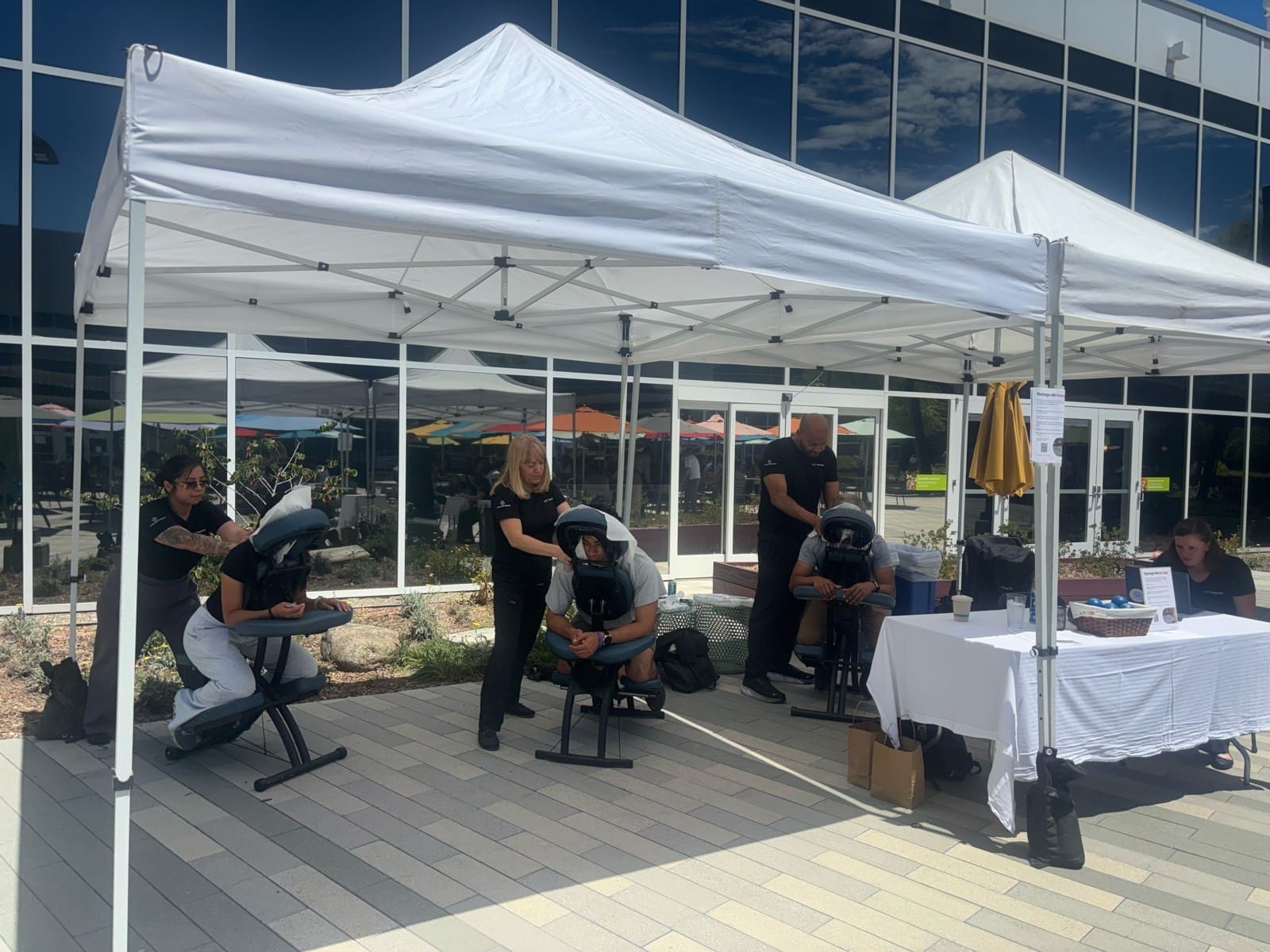
For companies exhibiting at health fairs, onsite chair massage can provide a natural way to attract attendees to a booth. Sessions are short, approachable, and give attendees a reason to stop rather than simply grab a brochure and keep walking. While employees wait or finish their massage, your team also has an opportunity to start a conversation and create a more memorable interaction.
Body Techniques works with companies specifically to bring professional massage into health fairs and corporate events, including using chair massage as a way to increase booth engagement.
For more ideas, explore Body Techniques’ guide to improving the customer experience at your health fair.
4. Start Employee Communication Early
Don’t wait until the day before the event to start promoting it.
Let employees know when and where the health fair is happening, but also tell them why they should attend.
Instead of:
“Our employee health fair is Thursday from 11–2.”
Give them something to look forward to. Highlight screenings, wellness resources, giveaways, massage, demonstrations, or other experiences they’ll find at the event.
Use the channels your employees already pay attention to, including email, Slack or Teams, company newsletters, your intranet, signage, and manager announcements.
5. Plan for Traffic, Wait Times, and Scheduling
Think about when employees are most likely to attend.
If everyone arrives during lunch, your most popular vendors may quickly develop a line. If your company operates across shifts, you’ll need to make sure employees have opportunities to participate throughout the day.
For popular activities like massage, determine whether appointments, walk-up sessions, or another system makes the most sense.
If massage is being used to generate booth traffic, consider placement as well. The goal should be to make the experience visible and inviting without creating congestion around neighboring vendors.
6. Confirm Logistics Before Event Day
A few days before the event, run through your logistics one more time.
Confirm:
- Vendor arrival times
- Parking and loading instructions
- Building access
- Booth locations
- Tables and chairs
- Power and Wi-Fi requirements
- Equipment needs
- Setup and breakdown times
- Primary event contacts
- Employee scheduling or signups
- Photo and testimonial permissions
Most importantly, make sure everyone understands who is responsible for what.
This is also where working with an experienced wellness partner can remove work from your team’s plate. Body Techniques coordinates scheduling, staffing, setup, and onsite logistics for its corporate wellness services, including support for companies with employees or events across multiple locations.
7. Give Vendors a Clear Day-of Plan
Your vendors should arrive knowing where to go, what to expect, and how the event will flow.
Provide clear arrival instructions and a primary point of contact. For interactive vendors, confirm expected attendance and any scheduling requirements ahead of time.
Body Techniques works with qualified massage professionals and manages provider coordination so companies don’t have to find and organize individual therapists for each event. This can be especially valuable when you’re planning health fairs in different markets or coordinating wellness initiatives across multiple offices.
8. Capture Feedback and Build on What Worked
Don’t let the health fair end when the booths come down.
Ask employees what they enjoyed, which services they used, and what they would like to see again. If appropriate, capture photos and testimonials that can help build excitement for your next wellness event.
Pay particular attention to participation. Which experiences consistently had employees stopping, waiting, and interacting?
A health fair can also be a useful way to introduce employees to services before making them part of a broader wellness strategy.
If massage receives a strong response, for example, employee massage programs can extend that experience into employee appreciation events, wellness weeks, busy seasons, or a recurring workplace wellness benefit.
9. Make Your Next Health Fair Easier to Manage
The best health fairs don’t just give employees information. They give them reasons to participate.
For companies looking to create a more engaging booth or add an interactive wellness experience, Body Techniques provides professional onsite massage for health fairs and corporate events. Their team can coordinate staffing, scheduling, setup, and event logistics, helping HR and event teams focus on the rest of the experience.
And if your health fair is the beginning of something bigger, Body Techniques also offers employee massage programs and workplace wellness services that can scale from one-time events to ongoing programs.
Ready to start planning? Explore Body Techniques’ corporate event and health fair options to learn more and get an estimate for your upcoming event.